3.3 Lecture 6: Meiosis-2
3.3.1 Lesson outline
 |
|---|
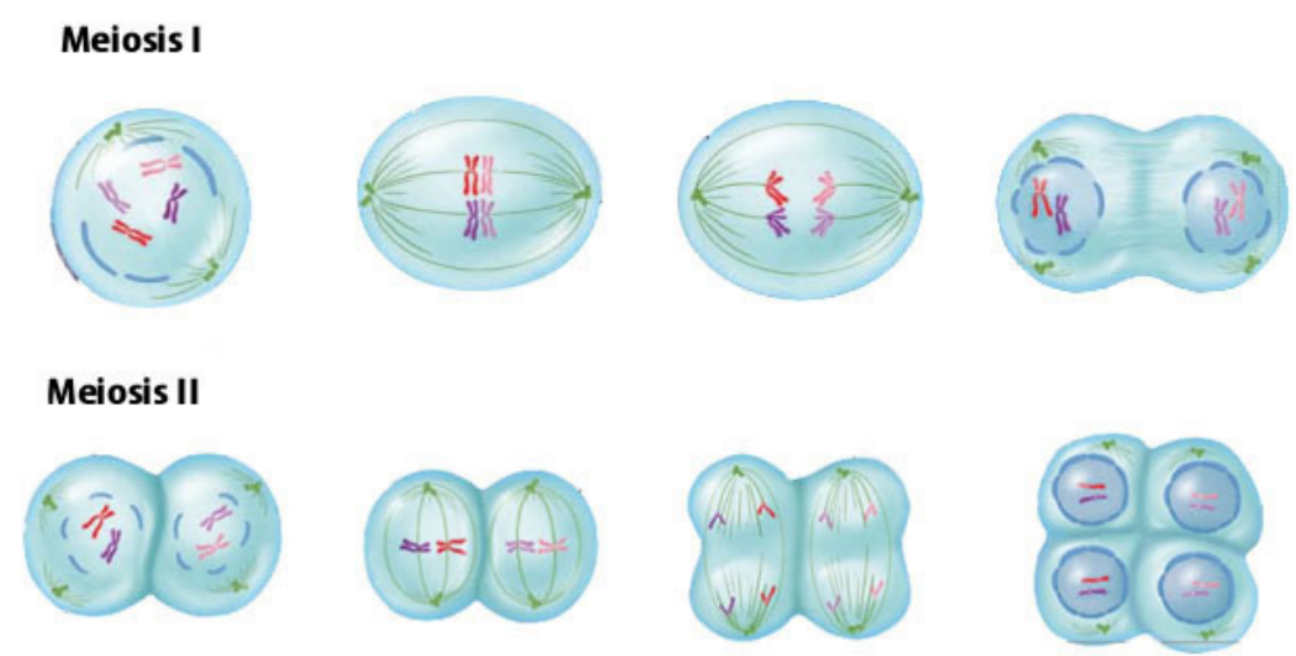
| meiosis illustration 1 |
 |
|---|
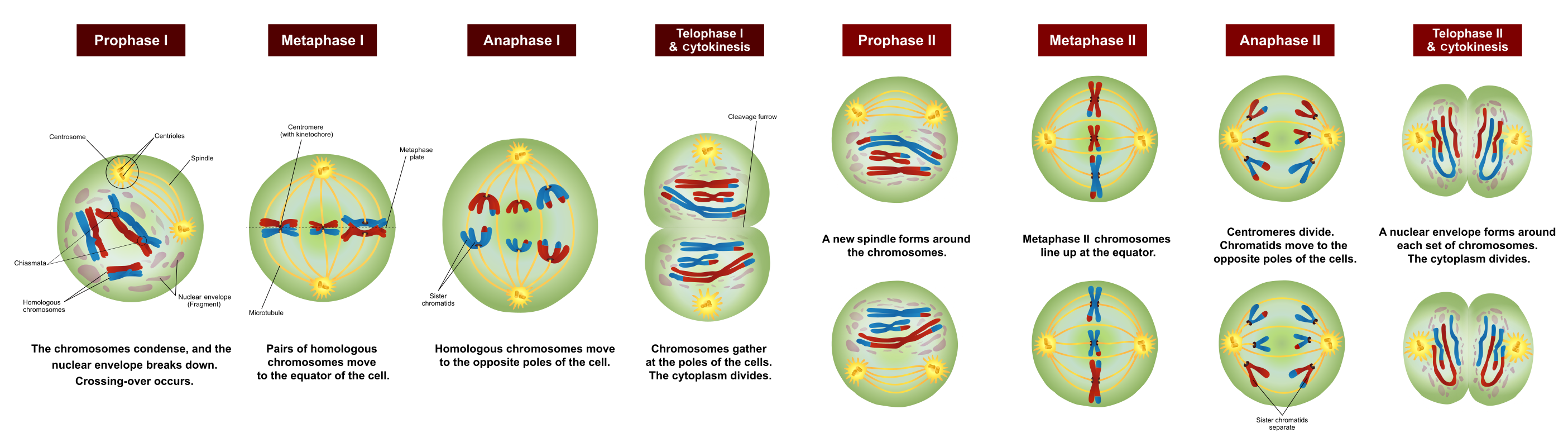
| meiosis illustration 2 |
 |
|---|
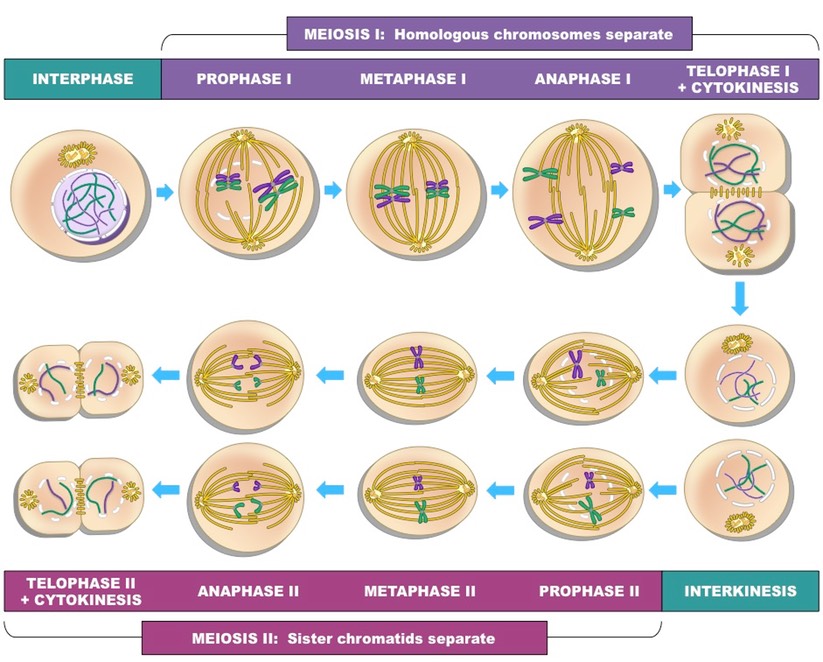
| meiosis illustration 3 |
- interphase
- Homologous chromosomes
- breaks
- middle
- Spindle
- homologous
- Sister chromatids
- two
- Sister chromatids
- Chromosomes; Nuclear membrane
- align
- pulled apart; opposite ends of the cells
- chromosomes
- four
- half
3.3.2 Homework
Multiple Choice Questions
1. A
2. C
3. C
4. D
Short Answer Questions
(6 points maximum) One point for each of the following:
Correct description of meiosis
Germ cell is a diploid cell, and goes through meiosis to produce gametes, which are haploid cells.
DNA replicates in interphase
DNA replicates in interphase, and each chromosome then has a pair of identical sister chromatids.
Homologous chromosomes pair in prophase I
Spindle fibers move chromosomes pairs to poles in anaphase I
In the end of meiosis I, two daughter cells are produced, and their chromosomes are halved.Two cycles/rounds of division in meiosis
No additional replication before meiosis II
Sister chromatids separate to poles in anaphase II
Separation of sister chromatids doesn’t change the number of chromsomes. The daughter cells are still haploid cells.1 germ cell yields 4 gametes
4 gametes, which are haploid cells, are produced in the end of meiosis.
Fill in the Blanks
1. Anaphase II
2. N/A
3. Metaphase I
4. Telophase II (not quite obvious)
5. Telophase I (not quite obvious)
6. N/A
7. Metaphase II
8. Prophase I
9. Prophase II
10. Anaphase I